Access tokens can come in two flavours - self-contained or reference.
A JWT token would be a self-contained access token - it’s a protected data structure with claims and an expiration. Once an API has learned about the key material, it can validate self-contained tokens without needing to communicate with the issuer. This makes JWTs hard to revoke. They will stay valid until they expire.
When using reference tokens - Open.IdentityServer will store the contents of the token in a data store and will only issue a unique identifier for this token back to the client. The API receiving this reference must then open a back-channel communication to Open.IdentityServer to validate the token.
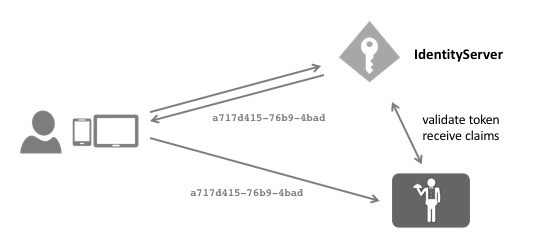
You can switch the token type of a client using the following setting
client.AccessTokenType = AccessTokenType.Reference;
Open.IdentityServer provides an implementation of the OAuth 2.0 introspection specification which allows APIs to dereference the tokens. There are some 3rd party libraries out there to help you integrate with the introspection endpoint.
The introspection endpoint requires authentication - since the client of an introspection endpoint is an API, you configure the secret on the ApiResource
var api = new ApiResource("api1")
{
    ApiSecrets = { new Secret("secret".Sha256()) }
}
See here for more information on how to configure the Open.IdentityServer authentication middleware for APIs.